When you sign a lease agreement — whether for an apartment, a car, or a piece of equipment — two terms show up almost immediately: lessor and lessee. These words might look nearly identical, but they describe two very different roles. Mixing them up can lead to real confusion about who pays whom, who handles repairs, and who holds legal ownership. Understanding the difference between lessor vs lessee is not just a vocabulary exercise — it is a practical skill that protects your rights and keeps agreements running smoothly.
This guide breaks down exactly who the lessor and lessee are, what each party is responsible for, and how the lessor vs lessee relationship plays out across real estate, car leases, accounting, and everyday life. Whether you are a first-time renter, a landlord, or a business professional reviewing contracts, this is everything you need to know.
Lessor vs Lessee: The Key Difference Explained
The core difference between lessor vs lessee comes down to ownership. The lessor is the party that owns the asset and grants permission to use it. The lessee is the party that receives that permission and pays for it.
In every lease agreement, money flows from lessee to lessor. The lessee makes periodic payments — rent, lease fees, or installments — while the lessor collects that income and retains legal title to the asset throughout the entire contract period.
Think of it this way: if you rent an apartment, you are the lessee. Your landlord is the lessor. The building belongs to the landlord, but you have the right to live in it under the agreed-upon terms.
What Is a Lessor?
A lessor is any person, business, or organization that owns an asset and leases it to another party in exchange for payment. The lessor holds legal title to the property or asset at all times during the lease. This ownership does not transfer to the other party simply because a lease exists.
Common examples of a lessor include:
- A landlord who rents out an apartment or commercial building
- A car dealership or leasing company that offers vehicle leases
- A bank or financial institution that leases equipment to businesses
- A property management company acting on behalf of a building owner
One key advantage of being a lessor is generating income from an asset without giving up ownership. The lessor continues to benefit from long-term asset appreciation while receiving regular lease payments.
Who Is the Lessee?
A lessee is the person or entity that obtains the right to use an asset owned by the lessor. According to Merriam-Webster, a lessee is “one that holds property by lease.” The lessee does not own the asset — they simply have a contractual right to use it for a set period.
Common examples of a lessee include:
- A tenant renting a home or apartment
- A business leasing office space or a retail storefront
- A driver leasing a vehicle from a dealership
- A company leasing heavy machinery or medical equipment
Being a lessee offers flexibility. Instead of purchasing an expensive asset outright, the lessee pays manageable installments, preserves capital, and returns the asset when the lease ends — or sometimes has the option to buy it.
Lessor vs Lessee: Side-by-Side Comparison
| Feature | Lessor | Lessee |
| Role | Asset owner / grantor | Asset user / tenant |
| Ownership | Retains legal title | No ownership rights |
| Payment Direction | Receives payments | Makes payments |
| Maintenance | Handles major repairs | Handles minor upkeep |
| Risk | Asset depreciation | Loss of usage rights if lease breached |
| Accounting | Records lease income | Records lease liability and right-of-use asset |
| At End of Lease | Asset returned or purchase option offered | Returns asset or exercises purchase option |
Lessor vs Landlord: Are They the Same?
Yes — in most real estate contexts, lessor and landlord are the same thing. The word “landlord” is an informal, everyday term for the property owner, while “lessor” is the formal legal term used in lease contracts and court documents.
When a lease agreement is drafted, the property owner is referred to as the lessor. In conversation, the same person is called the landlord. Similarly, the person renting the space might be called a tenant in everyday speech but appears as the lessee in the contract.
The distinction matters because legal documents always use “lessor” and “lessee.” If a dispute ends up in court, judges and attorneys refer to the contract’s precise language — and that language always says lessor and lessee, not landlord and tenant.
Lessor vs Lesser: Understanding the Common Confusion
Lessor and lesser are two completely different words that people often mix up simply because they sound similar when spoken aloud.
- Lessor (noun): The party who grants a lease; the owner in a lease agreement. Example: “The lessor signed the commercial lease contract.”
- Lesser (adjective): Meaning smaller, lower, or inferior in some way. Example: “The lesser of two evils is still a problem.”
The confusion usually appears in informal writing, where someone types “the lesser is responsible for repairs” when they mean “the lessor.” A good memory trick: the word lessor contains the word lease hidden inside it — leas-or — which helps link it to its correct meaning.
For more on tricky word pairs like this, the Residence Hexa guide on Complaint vs Complain: Meaning, Grammar, and Correct Usage explains how similar-sounding words carry very different grammatical roles — the same principle that separates lessor from lesser.
Legal Rights and Responsibilities of Lessors and Lessees
Understanding the lessor vs lessee relationship requires knowing what each party is legally obligated to do — and what rights they hold.
Lessor Responsibilities
The lessor’s primary duty is to deliver the asset in a usable, safe condition and maintain it throughout the lease term. Specific responsibilities include:
- Providing a habitable property: All systems (plumbing, heating, electrical) must be functional and up to code at the start of the lease
- Handling major repairs: Structural issues, roof problems, and significant damage are generally the lessor’s responsibility
- Complying with local laws: Fair housing rules, health and safety codes, and proper eviction procedures must all be followed
- Respecting the lessee’s right to quiet enjoyment: Most jurisdictions require the lessor to give at least 24 hours’ written notice before entering the leased property, except in emergencies
- Managing insurance and taxes: Unless the lease specifies otherwise, the lessor handles property taxes and building insurance
Lessee Responsibilities
The lessee’s core obligation is to pay on time and treat the asset with care. Key responsibilities include:
- Making timely lease payments on the agreed schedule
- Maintaining the property in good condition and handling minor upkeep
- Avoiding unauthorized modifications to the property or asset
- Reporting damage or needed repairs to the lessor promptly
- Following all lease restrictions — no subletting, no prohibited activities, no unauthorized occupants (unless the lease allows)
- Returning the asset in acceptable condition at the end of the lease term
What Happens If Either Party Breaks the Lease?
Breaching a lessor and lessee agreement carries serious consequences for both sides.
If the lessee breaches the lease:
- The lessor may terminate the agreement and pursue eviction
- The lessee may lose their security deposit
- The lessee can be sued for remaining rent owed under the contract
If the lessor breaches the lease:
- The lessee may have grounds to terminate early without penalty
- The lessee can withhold rent in some jurisdictions if the property becomes uninhabitable
- The lessee can pursue legal action for damages
Lessor and Lessee Agreement: What It Includes
A lessor and lessee agreement — the lease contract — is a legally binding document that governs the entire relationship. A properly drafted lease should include:
- Names of both parties: Clearly identifying the lessor and lessee
- Description of the asset: Address, vehicle VIN, equipment type, etc.
- Lease term: Start date, end date, or renewal conditions
- Rent or lease payment amount: The amount, due date, and accepted payment methods
- Security deposit terms: Amount, conditions for deductions, and return timeline
- Maintenance responsibilities: Which party handles which repairs
- Use restrictions: What the lessee can and cannot do with the asset
- Early termination clauses: Conditions under which either party can exit early
- Dispute resolution process: Mediation, arbitration, or court
Unclear language in any of these sections is one of the most common sources of lessor vs lessee disputes. Both parties should read the full agreement before signing.
Lessor and Lessee Examples in Real Life
Here are common lessor and lessee scenarios that illustrate how the relationship works across different settings:
- Residential real estate: Maria owns a two-bedroom apartment. She leases it to James for 12 months at $1,200/month. Maria is the lessor; James is the lessee.
- Commercial real estate: A retail chain leases storefront space from a property developer. The developer is the lessor; the retail company is the lessee.
- Equipment leasing: A construction company leases excavators from a heavy machinery firm. The machinery firm is the lessor; the construction company is the lessee.
- Sale-leaseback: A company sells its office building to an investor and immediately leases it back. The company becomes the lessee; the investor becomes the lessor.
- Subleasing: The original lessee leases part of their space to another party. The original lessee now acts as a sublessor, and the new party is the sublessee.
Lessor vs Lessee in Accounting
From an accounting standpoint, the lessor vs lessee distinction creates very different financial reporting obligations.
For the lessee (under ASC 842 and IFRS 16):
- Must recognize a right-of-use (ROU) asset on the balance sheet
- Must also record a corresponding lease liability representing the present value of future payments
- Finance leases recognize interest expense separately from amortization
- Operating leases record a single lease expense on a straight-line basis
For the lessor (under ASC 842):
- Classifies leases as operating, sales-type, or direct financing
- In operating leases, the lessor keeps the asset on its balance sheet and records depreciation
- In sales-type leases, the lessor derecognizes the asset and records a net investment and profit or loss
- Records lease payments received as income over the lease term
This accounting difference is one reason why identifying the lessor vs lessee correctly matters enormously in corporate finance and audit work.
Lessor vs Lessee for Car Leases
Car leases are one of the most common everyday examples of lessor vs lessee in action.
In a vehicle lease:
- The lessor is usually the dealership, a captive finance company (like Toyota Financial Services), or a bank
- The lessee is the driver who makes monthly payments for the right to use the vehicle
Key differences from buying:
- The lessee never owns the car during the lease term
- Monthly payments are generally lower than loan payments for the same vehicle
- The lessee must stay within agreed mileage limits
- At the end of the lease, the lessee returns the car, extends the lease, or exercises a purchase option
Understanding the lessor vs lessee dynamic in car leases helps drivers avoid surprise charges at lease-end for excess mileage or unreturned wear and tear.
Common Mistakes When Using Lessor and Lessee
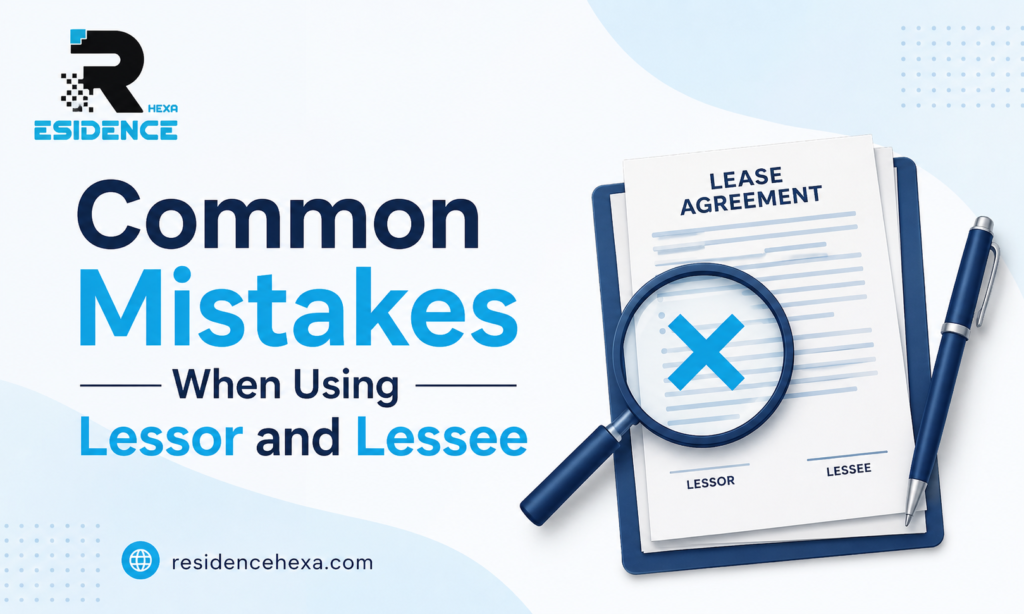
Even experienced professionals make errors when dealing with lessor vs lessee terminology. Watch out for these:
- Confusing lessor with lesser: Remember, “lessor” relates to leasing; “lesser” means smaller or inferior
- Assuming the lessee owns the property: The lessee has usage rights only — no ownership whatsoever
- Treating a property manager as the lessor: A property manager is an agent of the lessor, not the owner
- Leaving roommates off the lease: Unnamed occupants are not lessees and have no legal protections under the agreement
- Using vague language in contracts: Terms like “landlord” and “tenant” in a contract that also uses “lessor” and “lessee” can create ambiguity in disputes
Just as mixing up words with similar sounds can cause problems in legal writing — something the Residence Hexa guide on Purposed vs Proposed: Key Differences, Meanings & Examples covers in depth — confusing lessor with lesser in a formal document can undermine your credibility and even your legal position.
Tips for Lessors and Lessees Before Signing a Lease
Both parties have a lot to gain from careful preparation before putting pen to paper.
For lessors:
- Screen all adult occupants thoroughly before finalizing the lease
- Use a detailed, jurisdiction-specific lease template
- Document the property’s condition with photos before occupancy begins
- Clarify maintenance responsibilities in writing — never rely on verbal agreements
- Know your local landlord-tenant laws regarding notice periods, deposits, and habitability
For lessees:
- Read the entire lease before signing — not just the rent amount and move-in date
- Confirm who handles what repairs and under what timeline
- Ask about subletting rules, pet policies, and renovation permissions upfront
- Keep copies of all signed documents and payment receipts
- Understand the early termination clause before you need it
Case Study: Resolving a Lease Dispute
Scenario: A tenant (lessee) rented a commercial office space for 24 months. After 10 months, the building’s HVAC system failed. The lessee withheld two months of rent, claiming the space was unusable. The lessor threatened eviction for non-payment.
How it was resolved:
- Both parties reviewed the lease agreement — it stated the lessor was responsible for all structural and mechanical systems
- The lessee documented the failure with service reports and temperature logs
- A property inspector confirmed the HVAC system was non-functional
- A mediator assessed partial rent reduction for the months the office was compromised
- The lessor repaired the system and both parties agreed on a rent credit for the affected period
Lesson: A clearly written lessor and lessee agreement with defined maintenance responsibilities prevented this from becoming a costly court case. When each party’s obligations are spelled out, disputes are far easier to settle.
Conclusion
The difference between lessor vs lessee is straightforward at its core: the lessor owns the asset and the lessee uses it. But as this guide shows, the practical implications of those roles go much deeper — covering legal rights, financial obligations, accounting treatment, and real-world responsibilities that affect everyone from renters to CFOs.
Whether you are drafting your first lease, reviewing a car lease contract, or simply trying to make sense of formal legal language, knowing the lessor vs lessee distinction puts you in a much stronger position. Always read your lease carefully, know which party you are, and make sure every key term is written down before any agreement begins.