If you’ve ever typed “he’s the realest person I know” and then wondered whether that’s even a real word, you’re not alone. Scroll through social media, rap lyrics, or a group chat, and “realest” shows up everywhere — right next to “realist,” a word your English teacher probably taught you in a completely different context. The two look almost identical, share the same root word, and yet mean very different things.
This guide breaks down exactly what separates realest from realist, how each one works in a sentence, and when to use one over the other — whether you’re texting a friend, writing a college essay, or drafting a professional email. By the end, you’ll never second-guess yourself again.
Quick Answer
Realist is a noun (and sometimes adjective) for a person who sees things practically and deals with facts rather than wishful thinking. Realest is the informal superlative form of “real,” meaning “most genuine” or “most authentic.” Realist belongs in formal writing and philosophy; realest belongs in casual speech, music, and social media.
| Realist | Realest | |
| Part of speech | Noun / adjective | Adjective (superlative) |
| Meaning | A practical, fact-focused person | Most genuine, authentic, or true |
| Tone | Formal, neutral | Informal, slang |
| Common use | Philosophy, business, literature | Social media, music, casual talk |
| Example | “She’s a realist about deadlines.” | “That’s the realest thing you’ve said.” |
Meaning of the Correct Form
Both words are technically correct English — they’re just correct in different situations. The confusion usually starts because “realist” and “realest” are only one letter apart, yet that single letter completely changes the word’s job in a sentence.
1. What Does “Realest” Mean?
“Realest” is the superlative form of the adjective “real.” Just as “big” becomes “biggest,” real becomes realest, meaning “most real” or “most authentic.” It’s widely used in informal English, hip-hop culture, and everyday conversation to praise someone’s honesty, loyalty, or authenticity.
Examples (US & UK English)
- US: “You’re the realest friend I’ve ever had.”
- UK: “That was the realest conversation we’ve had in years.”
- US: “This documentary gives the realest look at life on the road.”
- UK: “Out of everyone in the group, she’s the realest.”
2. What Does “Realist” Mean?
“Realist” is a noun describing someone who accepts life as it actually is, rather than through idealism or wishful thinking. It also has a formal history in philosophy and art, where it refers to a school of thought or a style that represents the world accurately, without exaggeration or fantasy.
Examples (US & UK English)
- US: “My grandfather is a realist, not a dreamer.”
- UK: “As a realist, she always plans for worst-case scenarios.”
- US: “The painter was known as a realist for his lifelike portraits.”
- UK: “He gave a realist assessment of the company’s chances.”
Is “Realest” or “Realist” Incorrect?
Neither word is grammatically wrong — but using the wrong one in the wrong context absolutely is. This is where most of the confusion, and most of the mistakes, happen.
Common Misuse
- Writing “he’s the realist person I know” when you mean the most genuine (should be “realest”).
- Using “realest” in a formal report or academic paper instead of “realist” or “most realistic.”
- Treating “realist” as an adjective describing authenticity, when it’s actually a noun for a type of person.
Correct Usage
- Use realest when comparing levels of genuineness or authenticity in casual contexts.
- Use realist when naming or describing a person’s practical mindset, or referring to realism in art and philosophy.
Realist vs Realest Meaning
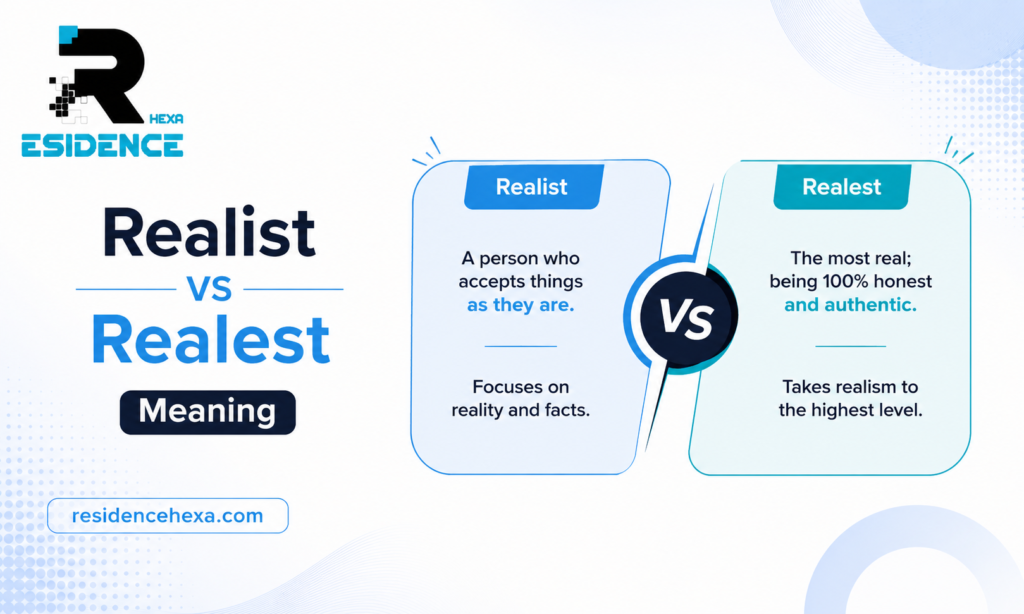
At the core, this comes down to grammar function. Realest describes a quality — how authentic something or someone is, taken to the highest degree. Realist describes a person — someone defined by a practical, fact-based way of seeing the world. Merriam-Webster’s dictionary entry for “realist” confirms this formal definition, describing it as someone inclined to see or represent things as they actually exist rather than as they might be imagined — a meaning that has stayed consistent across centuries of use.
Realest Meaning
To dig a little deeper: “realest” carries emotional weight that “realist” doesn’t. When someone says “you’re the realest,” they’re not making a philosophical statement — they’re expressing deep respect, admiration, or trust. It’s become a cultural marker of authenticity, especially in music, streetwear, and online communities where being “real” is treated as the highest compliment you can give someone.
Realest vs Realist: Key Differences
| Feature | Realest | Realist |
| Word origin | Real + superlative form | Real + “-ist” suffix |
| Grammar role | Adjective | Noun (occasionally adjective) |
| Formality level | Informal / slang | Formal and neutral |
| Where it’s used | Social media, lyrics, texting | Essays, business writing, philosophy |
| Can it be used in academic writing? | Rarely, avoid it | Yes, commonly accepted |
Key Difference Explained
The simplest way to remember it: realest measures degree (how real something is), while realist names a type of person (someone grounded in fact). If you can replace the word with “most genuine,” you want realest. If you can replace it with “a practical person,” you want realist.
Realist vs Idealist
These two words often appear together because they represent opposite mindsets. A realist deals with situations as they actually are, focusing on facts, limitations, and practical outcomes. An idealist, on the other hand, focuses on how things should be, often prioritizing principles, hope, or vision over immediate practicality. For example, a realist might say a project will take six months given current resources, while an idealist might insist it should be finished in six weeks because that’s the goal.
Realist vs Realest Examples
- “He’s a realist when it comes to budgeting.” (practical mindset)
- “That’s the realest advice anyone’s given me.” (most genuine)
- “The artist’s realist style captured everyday struggles.” (art movement)
- “She’s easily the realest person in this office.” (authenticity, informal)
Realest or Realist: Which One Should You Use?
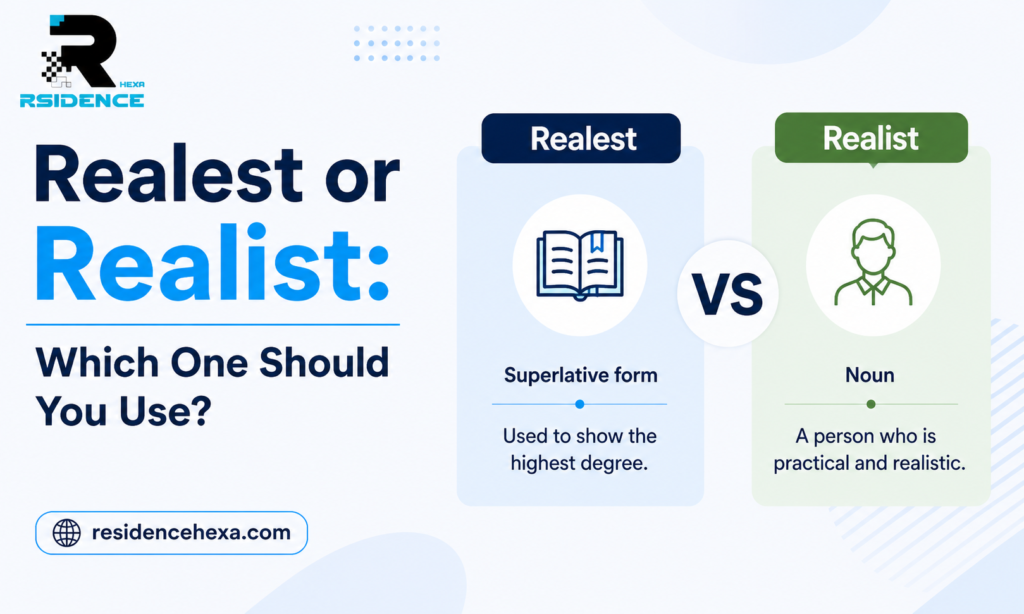
Ask yourself one simple question: are you describing a person’s personality type, or are you praising how genuine something is? If it’s the former, use realist. If it’s the latter, and the setting is casual, use realest. When in doubt in professional writing, skip realest entirely and use a safer alternative like “most authentic” or “most genuine.”
Common Mistakes People Make
Mistake 1: Using “Realest” as a Noun
Some writers mistakenly use “realest” to label a person, as in “he’s a realest.” This is incorrect — realest is an adjective, not a noun. The correct phrasing would be “he’s the realest person” or simply “he’s a realist.”
Mistake 2: Using “Realist” as an Adjective
While “realist” can occasionally function as an adjective (as in “realist painting”), it should not be used to mean “most genuine.” That job belongs to the realest.
Mistake 3: Overusing “Realest” in Formal Writing
Because realest is slang, dropping it into resumes, essays, or business emails instantly makes the writing sound too casual. Stick with formal alternatives in professional documents.
Mistake 4: Confusing the Tone
Even when the grammar is technically correct, using realest in a serious or formal context — or realist in a playful, casual one — can make a sentence feel mismatched or awkward.
Correct Usage in Sentences
Using “Realest” (Informal)
- “This is the realest song I’ve heard all year.”
- “You’re the realest one in this friend group.”
Using “Realist” (Formal & Informal)
- “She’s a realist, always weighing the pros and cons.”
- “Being a realist doesn’t mean giving up on your goals.”
UK vs. US Sentence Examples
- US: “He kept it realest with the whole team.”
- UK: “She’s always been the realist among us, sticking to the facts.”
- US: “The realist approach saved the company money.”
- UK: “That’s the realest thing anyone’s told me this year.”
Tips to Remember the Correct Usage

Tip 1: Focus on the Ending
“-ist” refers to a person or belief system (like artist, scientist). “-est” is a superlative ending (like biggest, fastest). Matching the ending to its grammatical job instantly clears up confusion.
Tip 2: Replace the Word
Swap the word with “most genuine” (realest) or “a practical person” (realist) and see which one fits the sentence naturally.
Tip 3: Check the Sentence’s Role
Ask whether the word is naming someone (noun) or describing a degree of authenticity (adjective). That answer tells you which word to use.
Tip 4: Use Formal Alternatives
In professional or academic writing, swap realest for “most authentic,” “most genuine,” or “most sincere” to stay polished and avoid slang.
Tip 5: Remember This Phrase
“A realist deals in facts; realest deals in feelings.” This one-liner captures the entire difference in a way that’s easy to recall.
Conclusion
Realist vs realest may share the same root, but they play completely different roles in the English language. Realist describes a person grounded in practicality and fact, making it the right choice for formal, academic, and professional writing. Realest, meanwhile, is a slang superlative reserved for casual conversations, music, and social media, where it expresses deep authenticity and genuine character. Once you understand the grammar behind each word — noun versus superlative adjective — you’ll never second-guess which one to use again.
For more word-confusion breakdowns like this one, check out Residence Hexa’s guides on staring vs starring and drier or dryer, which tackle similar spelling and usage mix-ups in plain, simple English.