If you’ve ever typed out a marketing email, a school essay, or a quick text and paused halfway through the word “targeted,” wondering whether it needs one “t” or two, you’re far from alone. This is one of the most common spelling mix-ups in English, and it trips up native speakers just as often as learners.
The confusion makes sense once you think about it. English is full of words that double their final consonant before adding “-ed,” so it’s only natural to assume “target” follows the same pattern. In this guide, we’ll settle the debate for good, explain exactly why the mistake happens, and show you how to use “targeted” correctly every single time — in both American and British English.
Quick Answer
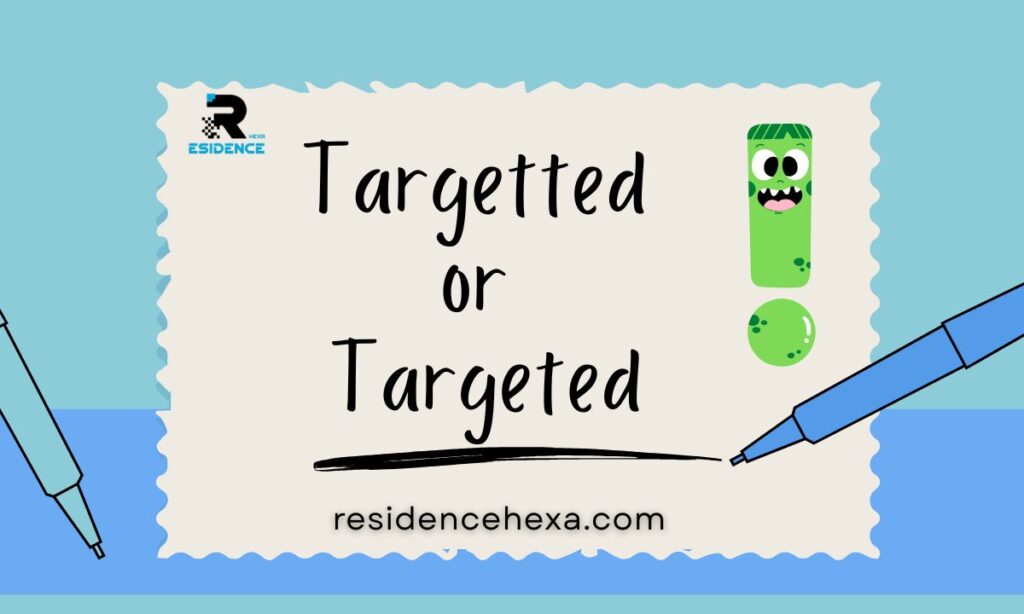
“Targeted” is correct. “Targetted” is a misspelling.
There is only one “t” after the “e” in “targeted,” and this holds true across American English, British English, Canadian English, and Australian English. No regional variation changes the rule here — unlike words such as “colour/color” or “travelling/traveling,” this one has a single accepted spelling worldwide.
| Spelling | Status | Used In |
| Targeted | ✅ Correct | US, UK, Canada, Australia |
| Targetted | ❌ Incorrect | Not accepted anywhere |
What Does “Targeted” Mean?
“Targeted” is the past tense and past participle of the verb “target.” It means to aim at, focus on, or direct something toward a specific person, group, goal, or object. According to Merriam-Webster, “target” as a verb means to make someone or something a target, essentially to single it out for attention or action.
You’ll see “targeted” used across a wide range of contexts:
- Marketing: “The brand launched a targeted ad campaign for Gen Z shoppers.”
- Military or security: “The strike targeted a specific compound.”
- Healthcare: “Doctors recommended a targeted treatment plan.”
- Everyday speech: “She targeted her energy toward finishing the project.”
In each case, “targeted” signals precision — something was chosen deliberately rather than by chance.
Is “Targetted” a Correct Spelling?
No. “Targetted” is not recognized by any major dictionary, style guide, or grammar authority. It doesn’t appear in Merriam-Webster, the Oxford English Dictionary, or Cambridge Dictionary as an alternate spelling. Spell-checkers and grammar tools consistently flag it as an error, and using it in professional writing — resumes, business proposals, academic papers — can quietly undercut your credibility.
That said, “targetted” is a common typo, especially in casual writing and older forum posts, which is part of why it feels oddly familiar even though it’s wrong.
Targetted vs Targeted: Key Differences
Here’s a side-by-side breakdown to make the distinction crystal clear:
| Feature | Targeted | Targetted |
| Correct spelling | Yes | No |
| Dictionary recognized | Yes (all major dictionaries) | No |
| Number of “t”s after “e” | One | Two |
| Accepted in US English | Yes | No |
| Accepted in UK English | Yes | No |
| Passes spell-check | Yes | No (flagged as error) |
| Appropriate for formal writing | Yes | Never |
The takeaway is simple: there’s no context — formal, informal, regional, or historical — where “targetted” is the right choice.
Why Do People Spell It as “Targetted”?
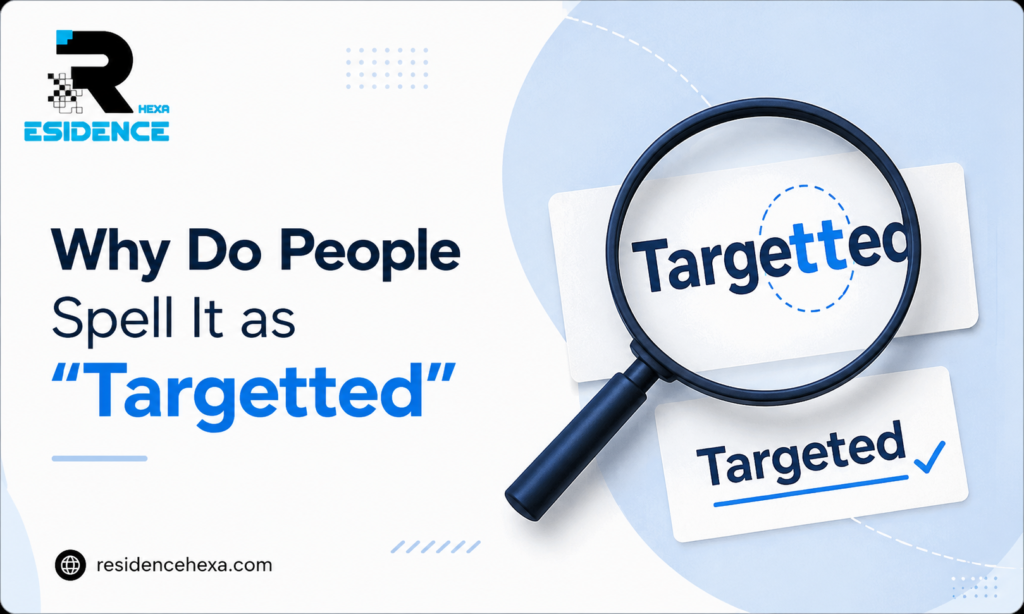
The double-“t” mistake isn’t random; it comes from a real English spelling rule being applied to the wrong word. Many verbs double their final consonant before adding a suffix like “-ed” or “-ing” when:
- The word ends in a single consonant preceded by a single vowel.
- The stress falls on the final syllable.
Think of examples like “stop → stopped,” “commit → committed,” or “regret → regretted.” Because “target” ends in “-et,” writers instinctively expect it to behave the same way.
But “target” breaks the pattern. The stress in “tar-get” falls on the first syllable, not the second. Since English generally only doubles the final consonant when the stress lands on that last syllable, “target” doesn’t qualify — and neither does “targeted” or “targeting.”
Is “Targetted” Accepted in British English?
No. This is one of the more surprising parts of the confusion, since British English is generally more likely to have double consonants than American English (compare “travelled” in the UK versus “traveled” in the US). Given that pattern, many assume British spelling would favor “targetted.”
It doesn’t. Both the Oxford English Dictionary and Cambridge Dictionary confirm that “targeted” is the standard spelling in British English as well. The stress-based rule still applies, so the UK and US spelling conventions actually agree here — a rare point of unity in a language known for its transatlantic spelling quirks.
Targeted vs Other Similar Spelling Confusions
“Targeted” isn’t the only word that causes doubling doubts. English has plenty of similar traps where writers second-guess whether to add an extra letter. If this kind of mix-up interests you, you might also want to check out how passersby is correctly pluralized, which follows an entirely different — and equally misunderstood — rule, or explore the distinction covered in unregister vs deregister, another pair that trips up even confident writers.
A few other commonly confused pairs worth knowing:
- Benefited vs Benefitted — “Benefited” is preferred in American English; “benefitted” appears more often in British usage but is less standard.
- Focused vs Focussed — Similar split, with “focused” being far more common.
- Marketed vs Marketted — Only “marketed” is correct, following the same stress rule as “targeted.”
Correct Usage of “Targeted” in Sentences
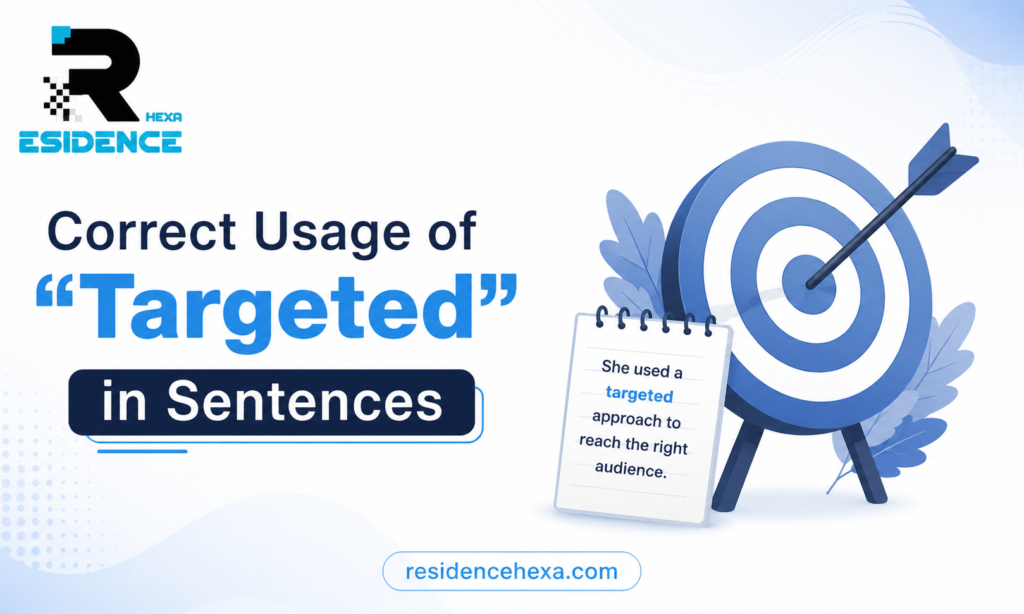
Seeing the word in context helps cement the correct spelling. Here are some clear examples:
- The company targeted young professionals with its new app.
- Our teacher gave us targeted feedback on the essay.
- The ad campaign was targeted at first-time homebuyers.
- Investigators targeted three suspects in the fraud case.
- She set targeted goals for the next quarter.
Notice that “targeted” can function as both a past-tense verb (“The campaign targeted…”) and an adjective (“targeted feedback,” “targeted goals”).
Common Mistakes People Make
Beyond the classic double-“t” error, a few related slip-ups show up frequently:
- Targetting instead of targeting — the same stress rule applies to the “-ing” form.
- Assuming regional spelling differs — writers sometimes think British English requires “targetted,” which isn’t the case.
- Autocorrect confusion — some outdated spell-checkers or informal writing tools fail to catch “targetted,” letting the error slip through.
- Mixing it up with truly doubled words — confusing “target” with words like “permit → permitted,” which do double the consonant because their stress falls on the final syllable.
Grammar Rule Behind the Spelling
The underlying grammar principle is called the doubling rule (sometimes referred to as the 1-1-1 rule), and it applies when a word:
- Has one syllable, or stress on the final syllable
- Ends in one consonant
- That consonant is preceded by one vowel
If all three conditions are met, the final consonant doubles before adding a vowel suffix (“-ed,” “-ing,” “-er”). “Target” fails the stress condition — the emphasis sits on “TAR,” not “get” — so the consonant stays single. This is the exact same reason words like “visit → visited” and “benefit → benefited” (in American English) don’t double either.
Tips to Remember the Correct Spelling
A few quick memory tricks can help the spelling stick permanently:
- Say it out loud. Notice the stress falls on “TAR-get,” not “tar-GET.” No stress on the last syllable means no doubling.
- Compare it to “visit.” “Visited” never doubles the “t,” and “targeted” follows the identical pattern.
- Picture a bullseye. One arrow, one target, one extra “t” — none needed.
- Run a spell-check. If you’re ever unsure, most modern spell-checkers will immediately flag “targetted” as wrong.
- Bookmark this rule: first-syllable stress means single consonant, almost every time.
Conclusion
The correct spelling is “targeted,” full stop — there’s no regional exception, no informal allowance, and no dictionary that recognizes “targetted” as valid. The confusion comes from a legitimate English spelling rule being misapplied, since “target” simply doesn’t carry the final-syllable stress that triggers consonant doubling.
Once you remember that small detail, you’ll never have to pause over this word again. Whether you’re writing a business report, a school assignment, or a quick social media post, using “targeted” correctly is a simple way to keep your writing polished and professional.