Ever finished a great conversation with someone and paused before hitting send on that closing line, unsure whether to write “stay in touch” or “keep in touch”? You’re not overthinking it. These two phrases sit so close in meaning that even confident English speakers second-guess themselves, and the “wrong” choice can quietly change how warm, formal, or committed your message sounds.
This guide breaks down exactly what each phrase means, where they overlap, where they diverge, and how to pick the right one for friends, family, coworkers, and clients. By the end, you’ll never hesitate over this word choice again.
Quick Answer: Stay in Touch vs Keep in Touch
Both phrases mean the same core thing: continue communicating with someone after this moment. The difference is tone, not grammar.
| Phrase | Feels Like | Best Used When |
| Stay in touch | Relaxed, warm, open-ended | Saying goodbye, casual farewells, personal relationships |
| Keep in touch | Intentional, active, slightly more formal | Professional emails, networking, situations needing follow-up |
Neither phrase is more “correct” than the other. According to Merriam-Webster, being “in touch” simply means being in a state of communication or contact with someone — both “stay” and “keep” are just different verbs attached to that same idea.
The Shared Meaning: Where “Stay in Touch” and “Keep in Touch” Overlap
At their core, both expressions express a wish to maintain contact with someone. If you say either phrase to a coworker, friend, or new acquaintance, they’ll understand you the same way: you want the relationship to continue beyond this conversation.
Grammatically, both are correct. Both appear in spoken and written English across personal and professional contexts. Both can be softened or intensified depending on your tone of voice, punctuation, or the words surrounding them. In casual daily use, most native speakers swap them freely without a second thought — and listeners rarely notice or care.
The overlap is so strong that dictionaries generally treat them as near-synonyms. The distinction only becomes meaningful when you look closely at connotation, expectation, and context.
Breaking Down “Stay in Touch”: Meaning, Implication, and Emotional Weight

What “Stay in Touch” Suggests
“Stay” is a verb of continuation — it implies something is already happening and should simply keep going without extra effort. That’s why “stay in touch” often feels effortless and low-pressure. It suggests the relationship exists on its own terms and doesn’t need scheduled maintenance.
Stay in Touch Meaning in Everyday English
In everyday conversation, “stay in touch” typically means: I’ve enjoyed this connection, and I’d like it to continue naturally, whenever it happens. There’s no implied timeline, no obligation to check in weekly, and no pressure attached.
When It’s Most Appropriate
- Saying goodbye after a trip, event, or short-term project
- Ending a friendly conversation with someone you may not see again soon
- Parting ways with an old classmate, neighbor, or acquaintance
- Any moment where warmth matters more than follow-through
Stay in Touch Examples
- “It was so great catching up — let’s stay in touch!”
- “I’m moving abroad next month, but I really want to stay in touch with everyone here.”
- “We may not talk every week, but we always stay in touch somehow.”
Breaking Down “Keep in Touch”: Meaning, Implication, and Social Pressure
What “Keep in Touch” Communicates
“Keep” is a verb of active maintenance — you keep a promise, keep a habit, keep a routine. That subtle difference gives “keep in touch” a slightly more deliberate, proactive feel. It suggests effort: checking in, following up, or making a conscious choice to stay connected.
Social Signals Behind the Words
Because “keep in touch” implies ongoing action, it can carry a light expectation that someone will actually follow up. In professional settings, this makes it feel more reliable and intentional — the speaker is signaling they genuinely plan to reach out again, not just offering a polite farewell.
When It’s Most Appropriate
- Closing a networking conversation where future collaboration is likely
- Professional emails, especially with clients or business contacts
- Situations where regular updates are expected (a project, a job transition, a shared task)
- Any context where you want to sound reliable and engaged
Keep in Touch Examples
- “Please keep in touch while you’re on assignment overseas.”
- “Great meeting you at the conference — let’s keep in touch about future partnerships.”
- “We’ve kept in touch since college, mostly through email.”
Stay in Touch vs Keep in Touch: Key Differences
| Feature | Stay in Touch | Keep in Touch |
| Tone | Warm, relaxed | Intentional, proactive |
| Implied effort | Low | Moderate to high |
| Common setting | Personal, casual | Professional, networking |
| Emotional weight | Sentimental | Practical |
| Sense of obligation | Minimal | Slightly higher |
Frequency and Follow-Through: What Each Phrase Implies About Action
Expectations with “Stay in Touch”
When someone says “stay in touch,” listeners generally don’t expect a scheduled check-in. It’s understood as a hope, not a commitment. If weeks or months pass without contact, no one feels the promise was broken.
Expectations with “Keep in Touch”
“Keep in touch” carries a slightly stronger implication of follow-through. Because “keep” suggests active maintenance, the listener may subconsciously expect a message, email, or call at some point — especially in professional contexts where the phrase often precedes an actual follow-up.
Quick Comparison: Implied Effort
- Stay in touch → passive, open-ended, no deadline
- Keep in touch → active, ongoing, mild expectation of contact
Case Example
Two colleagues, Sarah and Mark, meet at a conference. Mark ends the conversation with “Let’s stay in touch” — Sarah feels appreciated but not obligated to respond quickly. In a similar scenario, Mark instead says “Let’s keep in touch” — Sarah now perceives him as more intentional and may follow up sooner. The words are nearly identical, but the emotional signal changes.
Tone Changes Everything: How Context Alters Meaning
Spoken Conversations
In speech, tone of voice does most of the work. A cheerful, warm “stay in touch!” feels completely different from a flat, rushed version of the same words. The phrase itself matters less than how it’s delivered.
Written Messages
In text, punctuation and surrounding words carry that emotional weight instead. An exclamation point, an emoji, or a follow-up sentence like “I really mean it” can turn either phrase into something heartfelt.
Text vs Email vs In-Person
- Text messages: Both phrases read casually; “stay in touch” often feels slightly more personal.
- Emails: “Keep in touch” is more common in professional sign-offs because it signals intent to follow up.
- In-person goodbyes: “Stay in touch” is far more frequent, especially among friends and family.
Real-World Impact
Choosing the wrong phrase rarely causes real damage, but it can subtly shift perception. A hurried “keep in touch” at a family gathering might feel oddly formal, while “stay in touch” in a serious business email might undersell your intent to follow up.
Personal Relationships: Friends, Family, and Acquaintances
Close Friends and Family
Among people you’re emotionally close to, both phrases work, but “stay in touch” tends to feel more natural since the relationship doesn’t need active maintenance to survive.
Acquaintances
With people you’ve just met or don’t know well, “keep in touch” can sound more sincere because it signals genuine intention rather than a polite, throwaway line.
Case Study: Siblings Who Move Apart
When siblings move to different cities, they rarely say “let’s keep in touch” — it would sound oddly formal for family. Instead, “we’ll stay in touch” reflects an assumed, ongoing bond that doesn’t require deliberate effort to maintain.
Professional Settings: Networking, Colleagues, Clients
In Emails and LinkedIn
“Keep in touch” appears more frequently in professional email closings and LinkedIn messages because it signals reliability and follow-through — qualities valued in business communication.
Networking Events
After exchanging contact information at a conference or networking event, “let’s keep in touch” is the more common closing line, since it implies actual future contact rather than a passive hope.
Clients and Partners
With clients, “keep in touch” reassures the other party that communication will continue as needed, which builds trust and signals professionalism.
“Let’s Keep in Touch”: Meaning and Usage

What “Let’s Keep in Touch” Means
“Let’s keep in touch” is a joint invitation — both people agree to make an effort to maintain contact. It’s commonly used at the end of meetings, interviews, and professional exchanges.
Examples of “Let’s Keep in Touch”
- “It was great discussing this project — let’s keep in touch as things move forward.”
- “Let’s keep in touch about the internship opportunity.”
- “We should really keep in touch after this semester ends.”
“Keep Me in Touch”: Meaning and Correct Usage
What “Keep Me in Touch” Means
“Keep me in touch” is a slightly different construction — it’s a direct request asking someone else to update you, rather than a mutual agreement to stay connected. It’s most often used in workplace or project settings.
Common Examples
- “Keep me in touch with any updates on the shipment.”
- “Please keep me in touch if anything changes before the meeting.”
- “Keep me in touch regarding the client’s decision.”
Cultural and Regional Usage Differences
North America
In American English, “stay in touch” is slightly more common in everyday casual speech, while “keep in touch” appears more often in professional writing.
United Kingdom & Australia
British and Australian English use both phrases interchangeably, though “keep in touch” has a longer history in formal correspondence, dating back to letter-writing traditions.
Non-Native English Speakers
Learners often find the distinction confusing because both phrases translate to nearly identical expressions in many other languages. Understanding the tonal difference — rather than a grammatical rule — is the key to using them naturally.
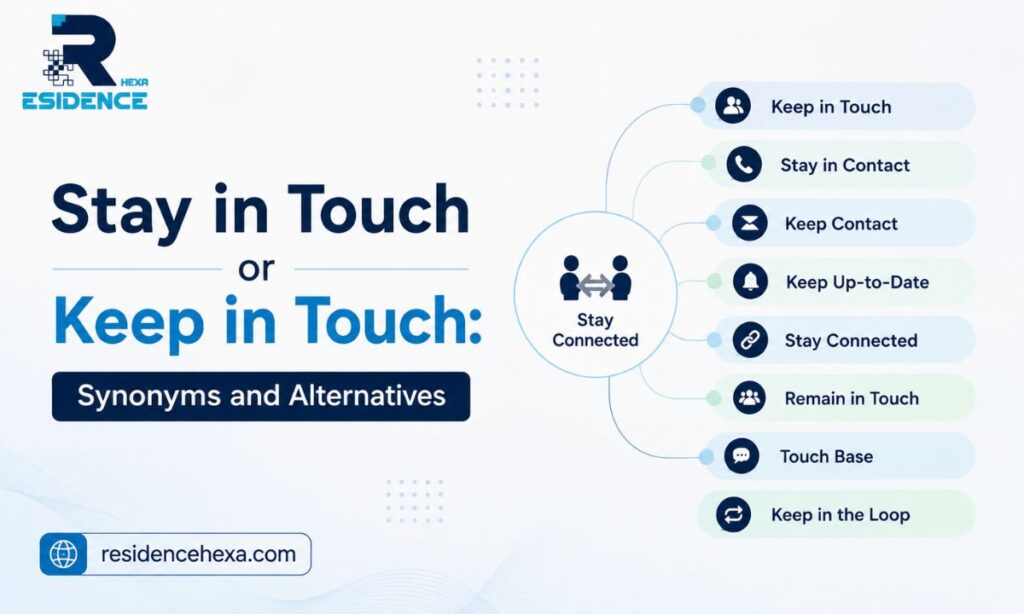
Stay in Touch or Keep in Touch: Synonyms and Alternatives
Synonyms for “Stay in Touch”
- Stay connected
- Remain in contact
- Keep the connection alive
- Reach out anytime
Synonyms for “Keep in Touch”
- Maintain contact
- Follow up regularly
- Stay updated
- Touch base
Other Natural Ways to Say It
- “Let’s not lose touch.”
- “Don’t be a stranger.”
- “I’d love to hear how things go.”
- “Send me updates when you can.”
Hidden Intent: What People Really Mean When They Say Each Phrase
“Stay in Touch” Subtext
Underneath the words, “stay in touch” usually means: I enjoyed this, and I want the door left open — but I’m not asking for anything specific.
“Keep in Touch” Subtext
“Keep in touch” often carries a quieter message: I intend to reach out again, and I’d like you to do the same.
Quick Reader Checklist
- Want to sound warm and low-pressure? Use stay in touch.
- Want to sound intentional and reliable? Use keep in touch.
- Talking to family or close friends? Either works, but stay in touch feels more natural.
- Closing a professional email or networking chat? Keep in touch signals follow-through.
Practical Decision Guide: Which One Should You Use?
Quick Rules
- Choose stay in touch for casual, emotional, or farewell moments.
- Choose keep in touch for professional, networking, or follow-up situations.
- When unsure, let your tone of voice or message context do the rest of the work — both phrases are safe choices in nearly every setting.
Examples That Work
- Personal goodbye: “It was wonderful seeing you — stay in touch!”
- Business email sign-off: “Looking forward to keeping in touch as the project develops.”
- Networking follow-up: “Let’s keep in touch — I’ll send over my contact details.”
Avoid These Pitfalls
- Don’t use “keep in touch” in a way that sounds cold with close family or lifelong friends.
- Don’t use “stay in touch” in formal business correspondence where follow-up is expected — it can undersell your intent.
- Don’t overthink it in casual conversation; both phrases are widely accepted and rarely misunderstood.
Choosing Words That Match Your Intent
Language experts, including resources like Grammarly, often point out that word choice shapes perception even when meanings overlap. The same logic applies here: picking the phrase that matches your actual intent — warmth versus reliability — makes your communication clearer and more authentic. If you’re also curious about how small word choices change meaning in other common English phrases, Residence Hexa’s guide on what is it called vs it’s called explores a similar kind of everyday confusion. Similarly, if you enjoy digging into subtle phrase distinctions like this one, the breakdown of yea or nay usage and meaning covers another common English decision point worth understanding.
Key Wins When You Use Them Right
- You sound more emotionally attuned in personal goodbyes.
- You sound more professional and dependable in business contexts.
- You avoid unintentionally sending mixed signals about your level of commitment.
- You communicate with more nuance, even in short, simple sentences.
Conclusion
“Stay in touch” and “keep in touch” will likely always be used interchangeably by most English speakers and that’s perfectly fine most of the time. But now that you understand the subtle tonal difference between them, you can choose more deliberately: reach for “stay in touch” when warmth and ease matter most, and lean on “keep in touch” when you want to signal genuine, ongoing effort.
Small word choices like these rarely change whether people understand you, but they do change how they feel about what you said and that’s a distinction worth knowing.