If you’ve ever read a contract, a court order, or a company policy and stumbled across a line like “the board may act as it deems fit,” you’ve probably paused for a second. It sounds official, a little old-fashioned, and slightly mysterious — but it’s actually one of the most common phrases in formal English. Once you understand where it comes from and how it works, you’ll start noticing it everywhere: in legal rulings, government notices, employment contracts, and even school policies.
This guide breaks down exactly what “deem fit” means, how it differs from lookalikes such as “see fit,” “deemed fit,” and “deem fit and proper,” and how to use each version correctly. Whether you’re a student trying to understand a legal reading, a professional drafting a policy, or simply someone who wants to write with more confidence, this article gives you a complete, practical reference.
What Does “Deem Fit” Mean?
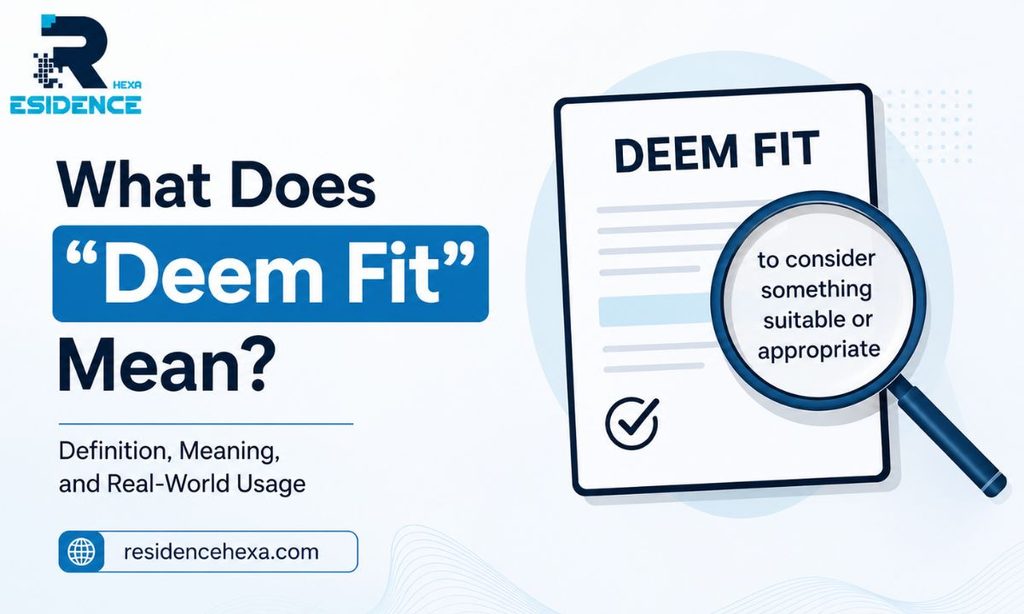
“Deem fit” means to judge or decide that something is appropriate, suitable, or right based on personal judgment or official authority. It is used when a person, court, organization, or institution has the power to make a discretionary decision rather than follow a fixed, rigid rule.
Simple Meaning of “Deem Fit”
In plain English, “deem fit” simply means “consider appropriate” or “think proper.” If a manager says employees can be assigned tasks “as management deems fit,” it means management gets to decide what’s appropriate based on the situation — not a strict, pre-written formula.
“Deem It Fit” Meaning
“Deem it fit” is a close variant that inserts the pronoun “it” for extra clarity or emphasis, usually referring back to something already mentioned. For example: “The committee reviewed the proposal and deemed it fit for approval.” The meaning stays the same — a judgment of suitability — but the phrasing points more directly at a specific object or action.
What Does “Deem” Mean?
According to the Merriam-Webster dictionary, “deem” means to come to think or judge something to be a certain way — essentially, to form an opinion or make a determination. The word traces back to Old English dēman, meaning “to judge” or “to pronounce judgment,” which explains why it still carries such a formal, authoritative tone today. When you combine “deem” with “fit,” you get a phrase that specifically expresses a judgment about suitability or appropriateness.
“Deem Fit” in a Sentence
Here are a few natural examples:
- The court may impose any penalty it deems fit.
- The landlord can make repairs as he deems fit.
- The university may modify the curriculum as it deems fit.
- She reorganized her schedule as she deemed fit.
“Deem Fit” vs. “Dim It Fit”
This is one of the most common spelling mix-ups online. “Dim it fit” is simply incorrect — it’s a mishearing of “deem it fit,” likely because the two phrases sound similar when spoken quickly. “Dim” refers to low light or reduced brightness and has nothing to do with judgment or decision-making. If you’re writing formally, always use “deem” (not “dim”), since “deem it fit” is the only version with any grammatical or legal standing.
Where and When Is “Deem Fit” Used?
“Deem fit” isn’t everyday conversational English — you’re unlikely to hear a friend say it over coffee. Instead, it belongs to a family of formal expressions reserved for writing where authority, discretion, and precision matter. Here’s where it shows up most often.
Legal and Court Documents
Courts and statutes use “deem fit” to grant judges, tribunals, and regulatory bodies flexibility. Instead of listing every possible outcome, the law simply allows the decision-maker to choose whatever remedy or order they consider appropriate for the circumstances.
Government and Policy Text
Government agencies use the phrase in regulations, licensing rules, and public notices to describe the discretionary powers of officials — for instance, allowing an authority to “take such measures as it deems fit” to protect public safety.
Business and Corporate Writing
Corporate bylaws, HR policies, and internal memos often use “deem fit” to describe management’s authority to make staffing, budget, or operational decisions without spelling out every scenario in advance.
Academic and Institutional Writing
Universities and schools use the phrase in codes of conduct and administrative policies, granting faculty or committees room to apply judgment case by case — for example, deciding disciplinary consequences “as the board deems fit.”
“Deem Fit” Meaning in Law
What Does “Deem Fit” Mean in Legal Language?
In legal writing, “deem fit” signals that a court, tribunal, or authority is not bound by a single prescribed action. Instead, they can choose from a range of reasonable responses based on the facts of the case. It’s a legal shorthand for “use your judgment within your lawful authority.”
Why Is “Deem Fit” Common in Legal Writing?
Legal drafters rely on “deem fit” because rigid rules can’t anticipate every situation. The phrase allows statutes and contracts to remain flexible while still operating within clear legal boundaries. It:
- Grants discretion to the decision-maker (judge, tribunal, or regulator)
- Avoids overly prescriptive commands
- Keeps the door open for context-specific, reasoned decisions
- Signals that the outcome must still be lawful, fair, and justifiable
“Deem Fit” and Official Discretion
Discretion is the legal backbone of “deem fit.” It doesn’t mean unlimited power — it means the authority figure must weigh the facts and reach a reasonable, defensible conclusion. Courts still expect that discretion to be exercised fairly, not arbitrarily.
Examples of “Deem Fit” in Legal Contexts
- “The tribunal may issue any order it deems fit to resolve the dispute.”
- “The magistrate shall impose penalties as deemed fit under the circumstances.”
- “The regulator may enforce compliance measures it deems fit.”
“Deem Fit” vs. “Deemed Fit”
“Deem Fit” Meaning and Usage
“Deem fit” is typically used in the present or future tense, describing an ongoing or upcoming discretionary power: “The board may deem fit to change the policy.”
“Deemed Fit” Meaning and Usage
“Deemed fit” is the past-tense (passive) form, describing a decision that has already been made: “The candidate was deemed fit for the position after review.”
Deem Fit vs. Deemed Fit: Key Difference
| Feature | “Deem Fit” | “Deemed Fit” |
| Tense | Present/future, active discretion | Past tense, completed judgment |
| Typical structure | “As [authority] deems fit” | “[Subject] was deemed fit” |
| Focus | The power to decide | The result of a decision already made |
| Example | “The court may act as it deems fit.” | “The applicant was deemed fit for the role.” |
Examples of Both Forms
- Deem fit: “Employees may be reassigned as management deems fit.”
- Deemed fit: “The building was deemed fit for occupancy after inspection.”
“Deem Fit” vs. “See Fit”
Difference in Meaning and Usage
Both phrases describe discretionary judgment, but they carry slightly different tones. “Deem fit” leans more formal and is common in legal and official writing, while “see fit” is a touch more conversational and widely used in everyday professional English, though it can still appear in formal documents.
“As You Deem Fit” Meaning
“As you deem fit” means “in whatever way you consider appropriate.” It’s commonly used to hand over decision-making authority to someone else — for example, in an email: “Please proceed as you deem fit.”
Examples of “See Fit” and “Deem Fit”
- See fit: “Use the funds as you see fit.”
- Deem fit: “Use the funds as you deem fit.”
Both sentences mean essentially the same thing, but “deem fit” carries a slightly heavier, more official tone, while “see fit” feels a bit more natural in casual business speech.
“Deem Fit” vs. “Deem Fit and Proper”
What Does “Deem Fit and Proper” Mean?
“Fit and proper” is a more specific legal and regulatory phrase used to assess someone’s overall suitability and integrity for a role — not just whether a single decision is appropriate, but whether a person is trustworthy, competent, and qualified to hold a position of responsibility.
Why Regulators Use “Fit and Proper”
Financial regulators, licensing authorities, and professional bodies use “fit and proper” tests to evaluate character, competence, and honesty before granting licenses or approving appointments. It’s a broader, more formal standard than a simple one-off judgment call.
Examples in Legal and Regulatory Writing
- “The authority must determine whether the applicant is a fit and proper person to hold the license.”
- “Directors must be deemed fit and proper before appointment to the board.”
How to Use “Deem Fit” in a Sentence
Legal Examples
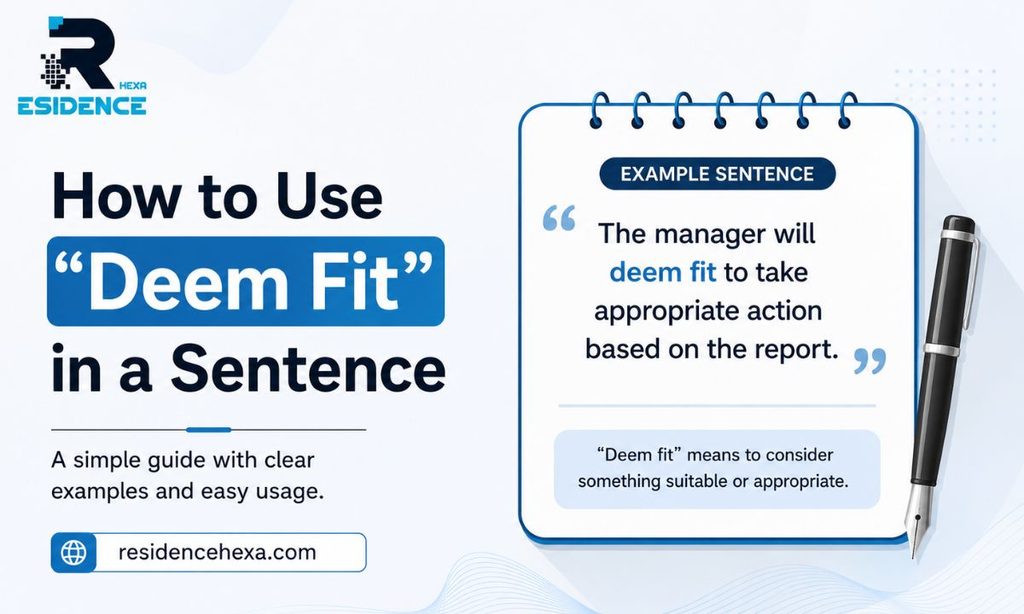
- “The judge may order any remedy she deems fit.”
- “The tribunal will decide penalties as it deems fit.”
Business Examples
- “Leadership may restructure teams as deemed fit.”
- “The manager allocated resources as she deemed fit.”
Government and Policy Examples
- “The agency may implement safety measures it deems fit.”
- “Local authorities may enforce restrictions as deemed fit.”
Academic Examples
- “The disciplinary committee may take action it deems fit.”
- “Professors may adjust grading criteria as deemed fit for the course.”
Everyday Examples
- “Decorate the room however you deem fit.”
- “Handle the situation as you deem fit.”
“Deem Fit” Synonyms and Alternatives
If “deem fit” feels too formal for your context, here are some natural alternatives:
- Consider appropriate – “The board will consider appropriate action.”
- Consider suitable – “She considered the venue suitable for the event.”
- Judge appropriate – “The referee judged the call appropriate.”
- Find suitable – “They found the candidate suitable for the role.”
- Leave to someone’s discretion – “The decision is left to the manager’s discretion.”
Common Expressions With “Deem Fit”
- As you deem fit – granting someone else the authority to decide
- As deemed fit – describing an already-made discretionary decision
- Deem it fit – judging a specific action or item to be appropriate
- Deemed fit and proper – a formal assessment of overall suitability, often for a license or office
Regional and Industry Differences in “Deem Fit”
Commonwealth English
In the UK, India, Australia, and other Commonwealth nations, “deem fit” appears frequently in statutes, court rulings, and government correspondence, reflecting a long tradition of formal legal drafting inherited from English common law.
American English
American legal and business writing also uses “deem fit,” though it’s often paired with alternatives like “see fit” in less formal internal documents, while statutes and court opinions still favor the more traditional phrasing.
Legal and Government Usage
Across regions, “deem fit” remains a staple of statutory language, regulatory notices, and judicial writing, largely because it precisely communicates discretionary authority within a lawful boundary.
Business and Corporate Usage
In the corporate world, “deem fit” is common in bylaws, employment contracts, and internal policy documents, especially where decision-making authority needs to be clearly assigned without listing every possible scenario.
Common Mistakes With “Deem Fit”
Using “Dim It Fit” Instead of “Deem It Fit”
As covered earlier, “dim it fit” is a spelling error with no real meaning. Always use “deem,” never “dim.”
Confusing “Deem Fit” With “See Fit”
While similar, mixing up formality levels can weaken a document’s tone. Reserve “deem fit” for formal, legal, or official writing, and “see fit” for slightly more relaxed professional contexts.
Misusing “Deemed Fit”
Writers sometimes use “deemed fit” when they mean the present-tense “deem fit,” or vice versa. Remember: “deemed” signals a completed judgment, while “deem” signals ongoing or future discretion.
Using the Phrase in Casual Conversation
“Deem fit” can sound stiff or overly formal in everyday speech. In casual conversation, simpler phrases like “however you want” or “whatever works” communicate the same idea more naturally.
Tips for Using “Deem Fit” Correctly
- Use “deem fit” in legal, official, or highly formal writing — not casual conversation.
- Match tense carefully: “deem fit” for present/future discretion, “deemed fit” for completed judgments.
- Don’t confuse “deem” with “dim” — they are unrelated words.
- Reserve “fit and proper” for assessments of overall character or qualification, not single decisions.
- When in doubt, “see fit” or “consider appropriate” are safer, slightly less formal alternatives.
“Deem Fit” Meaning: Quick Reference Table
| Phrase | Meaning | Typical Use |
| Deem fit | To judge something appropriate (present/future) | Legal, corporate, government writing |
| Deemed fit | Already judged appropriate (past tense) | Completed decisions, evaluations |
| Deem it fit | Judge a specific thing appropriate | Referring to a named item or action |
| See fit | Consider appropriate (slightly less formal) | Business and everyday professional writing |
| Fit and proper | Overall suitability and integrity | Regulatory and licensing assessments |
| Dim it fit | Incorrect spelling | Should never be used |
Conclusion
“Deem fit” is a small phrase that carries a lot of weight. At its core, it simply means to judge something appropriate or suitable but in legal, governmental, and corporate writing, it becomes a precise tool for granting discretion to judges, regulators, managers, and institutions. Knowing the difference between “deem fit,” “deemed fit,” “see fit,” and “fit and proper” helps you read formal documents with more confidence and write your own policies, contracts, and official communication with greater clarity and authority.
Once you understand this phrase, you’ll start spotting it everywhere — and you’ll know exactly what it’s really asking: for someone in authority to use good judgment. If you’re curious about other formal expressions that still show up in official English, it’s worth reading how words like “yea” and “nay” have survived in legal and governmental language, or how the choice between informal and formal terms like “unregister” and “deregister” changes depending on context.
Meta Description:
“Deem fit meaning explained: definition, legal use, and real examples. Learn how deem fit vs deemed fit vs see fit differ in formal writing.” (145 characters)
Focus Keyword:
deem fit meaning