If you’ve ever paused mid-sentence wondering whether to type “of course” or “ofcourse,” you’re not alone. This tiny phrase trips up even confident writers, and autocorrect doesn’t always save you in time. The good news is that the rule is simple once you understand why the two-word form is the only correct one — and once it clicks, you’ll never second-guess it again.
In this guide, we’ll break down the correct spelling, the meaning behind “of course,” why “ofcourse” keeps showing up in casual writing, and how to use the phrase confidently in emails, essays, and everyday conversation. We’ll also look at close cousins like “off course” and “offcourse,” so you never mix them up again.
Why People Get Confused About “Of Course”
Before getting into the rule itself, it helps to understand where the confusion actually comes from. It isn’t laziness — it’s how the phrase behaves in speech and in fast typing.
- Phonetic Blending — When spoken naturally, “of” and “course” run together into what sounds like one smooth word, which tricks the brain into thinking it should be written the same way.
- Texting and Informal Writing — In chats and social media, people prioritize speed over accuracy, so short forms and merged words slip through unnoticed.
- Compound Word Assumptions — English does merge some phrases into single words over time (like “nowadays” or “cannot”), so writers sometimes assume “of course” follows the same pattern. It doesn’t.
- Autocorrect Influence — Ironically, some keyboards and apps fail to flag “ofcourse” as an error, especially on mobile, which reinforces the mistake.
Understanding these triggers makes it much easier to catch the error before it becomes a habit.
The Correct Spelling: “Of Course”
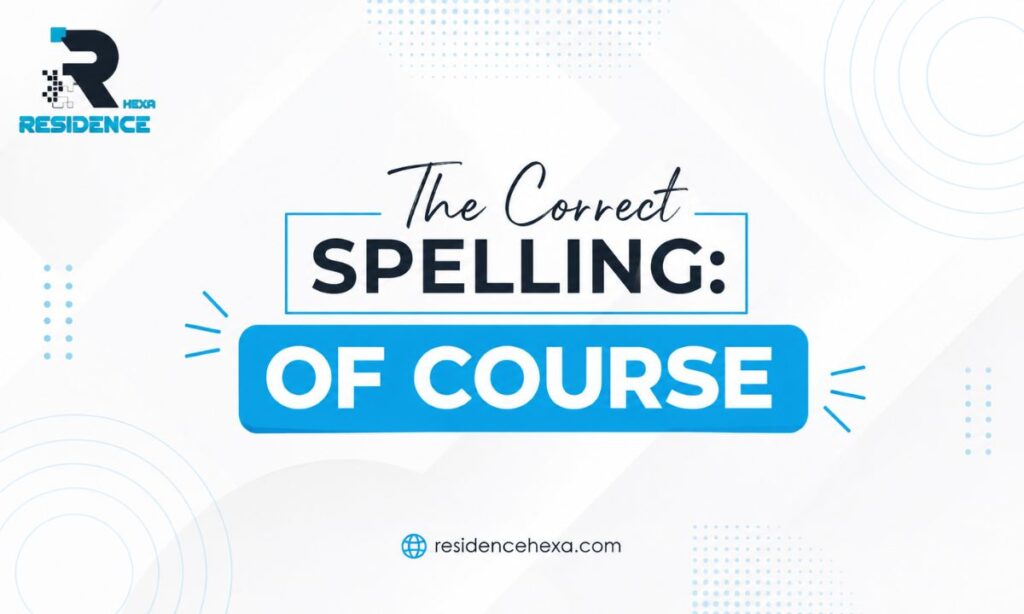
Of Course Spelling in English
There is only one accepted spelling: of course, written as two separate words with a space between them. No hyphen, no merged form, no exceptions — not in casual writing, not in academic papers, not in business correspondence.
Of Course Meaning
According to Merriam-Webster, “of course” is used to introduce an idea or action as being obvious or expected, functioning similarly to “naturally” or “as you would expect.” In plain terms, it signals agreement, confirmation, or something so evident it barely needs stating.
How “Of Course” Functions in Sentences
Grammatically, “of course” is a prepositional phrase acting as an adverbial discourse marker — meaning it modifies the whole sentence rather than a single word. That’s exactly why it can’t be squeezed into one word: “of” is a preposition, and “course” is the noun it governs. They’re two separate grammatical units that happen to work together as a fixed expression, not a compound word like “keyboard” or “basketball.”
It can appear at the start, middle, or end of a sentence:
- Of course, I’ll help you finish the report.
- I will, of course, need the final numbers by Friday.
- You can join the call, of course.
Using “Of Course” in Formal Writing
In professional emails, academic papers, and reports, “of course” works well when used sparingly to confirm agreement or soften a statement. Overusing it, however, can weaken your writing’s authority, so reserve it for moments where genuine confirmation or reassurance is needed.
When the Phrase Works Best
“Of course” shines when you want to:
- Confirm something politely (“Of course, that’s fine.”)
- Acknowledge an obvious point without sounding condescending
- Add warmth to an otherwise blunt response
The Incorrect Spelling: “Ofcourse”
Why “Ofcourse” Is Wrong
“Ofcourse” is not recognized by any dictionary, style guide, or grammar authority. It results from merging a preposition and a noun into a single word, something English simply doesn’t do with this phrase. Because “of” and “course” retain separate grammatical roles, they can never be fused.
Ofcourse Spelling in English
There is no context — formal, informal, academic, or conversational — in which “ofcourse” is considered correct. It’s a spelling error, not a stylistic variant.
Ofcourse Means: What Does “Ofcourse” Mean?
“Ofcourse” doesn’t carry a distinct meaning of its own. It’s simply a misspelling of “of course” and should be read (and corrected) as such.
Examples of Incorrect Usage and Corrected Versions
| Incorrect (Ofcourse) | Corrected (Of Course) |
| Ofcourse I’ll help you. | Of course I’ll help you. |
| I find that difficult, ofcourse. | I find that difficult, of course. |
| Ofcourse, we can reschedule. | Of course, we can reschedule. |
| She said ofcourse she’d attend. | She said of course she’d attend. |
Why Search Engines Auto-Correct “Ofcourse”
Search engines and spell-checkers recognize “of course” as the statistically dominant, dictionary-verified form, so queries or text containing “ofcourse” are typically flagged or auto-corrected. This is a strong signal on its own: if a phrase never appears as “correct” across major reference tools, it isn’t correct.
Commonly Confused Variations of “Of Course”
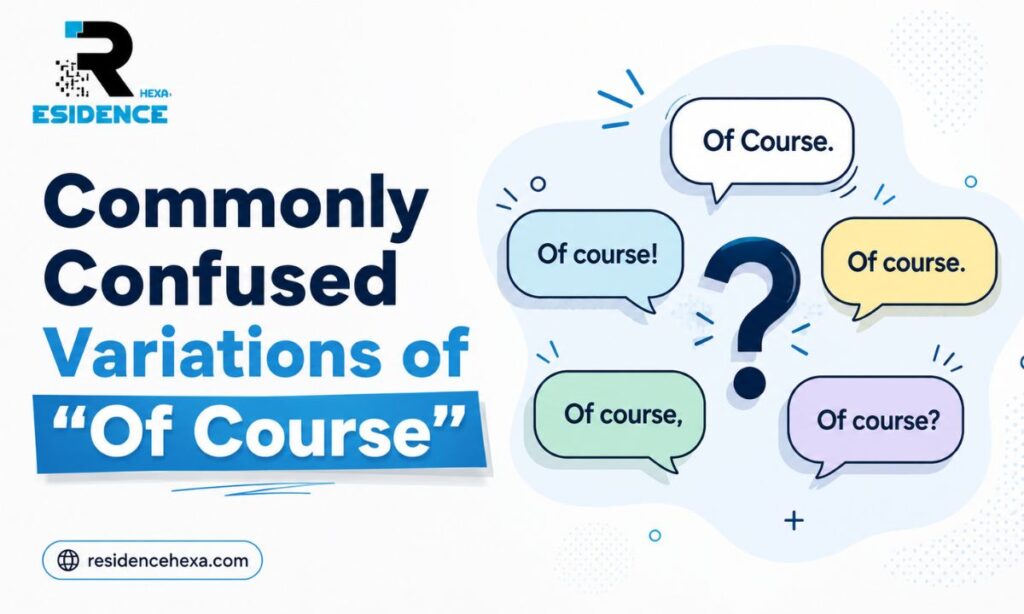
“Offcourse” — Another Incorrect Form
Some writers, trying to avoid “ofcourse,” accidentally add an extra “f” and produce “offcourse.” This is equally wrong — it isn’t a word, and it shouldn’t be confused with the legitimate phrase below.
“Off Course” — A Completely Different Meaning
Unlike “ofcourse” and “offcourse,” off course is a real, correctly spelled phrase — but it means something entirely different.
Off Course Definition
“Off course” describes deviating from an intended path, route, or plan. It’s commonly used in navigation, aviation, and figurative contexts about losing direction.
Off Course Examples
- The ship drifted off course during the storm.
- Losing that client pushed our sales strategy off course.
- The pilot corrected the plane after it went off course.
Of Course or Ofcourse Grammar: What Is the Correct Form?
Is “Of Course” Always Written as Two Words?
Yes, without exception. Whether it opens a sentence, sits in the middle, or closes a reply, “of course” is always two words.
Is “Ofcourse” Ever Correct in English?
No. There is no dictionary entry, grammar rule, or style guide that accepts “ofcourse” as a standard spelling.
Of Course or Ofcourse Examples
| Sentence | Correct? |
| Of course, that makes sense. | ✅ Correct |
| Ofcourse, that makes sense. | ❌ Incorrect |
| You may, of course, disagree. | ✅ Correct |
| You may, ofcourse, disagree. | ❌ Incorrect |
Of Course Meaning and Usage
What Does “Of Course” Mean?
At its core, “of course” communicates that something is expected, obvious, or agreed upon without needing further explanation. It can express permission, confirmation, or gentle emphasis depending on tone and context.
“Yes, Of Course” Meaning
Adding “yes” before “of course” strengthens the affirmation — it’s a warm, enthusiastic way of agreeing, often used when someone asks for help, permission, or reassurance. “Can you send that file today?” “Yes, of course.”
“Of Course You Are” Meaning
This phrase can be read two ways depending on tone: as genuine agreement (“Of course you are the right person for this”) or as light sarcasm implying doubt (“Of course you are — sure you didn’t forget”). Context and punctuation (or spoken tone) determine which meaning applies.
How to Use “Of Course” Correctly
Side-by-Side Comparison Table
| Feature | Of Course | Ofcourse |
| Correct spelling | ✅ Yes | ❌ No |
| Recognized by dictionaries | ✅ Yes | ❌ No |
| Acceptable in formal writing | ✅ Yes | ❌ Never |
| Number of words | Two | One (incorrect merge) |
| Common in casual texting | Sometimes shortened but still two words | Frequently misspelled here |
How to Remember the Correct Spelling

Mnemonic Tricks
Think of “of course” like “of course there’s a space” — the phrase itself is a reminder. You can also picture the two words as a golf “course” you’re heading “of” (from) — separate stops, separate words.
Word Association
Pair “of course” mentally with similar two-word phrases that never merge, such as “a lot,” “in fact,” and “as well.” If those stay separate, “of course” does too.
Case Study: How Memory Tricks Helped Writers
A university writing center once tracked a group of ESL students who consistently misspelled “of course” in essays. After introducing the “a lot / in fact / of course” association drill, repeat errors dropped noticeably within a few weeks — proof that simple grouping techniques can correct even deeply ingrained habits.
Synonyms and Alternatives to “Of Course”
Repeating “of course” too often can make writing feel repetitive. Here are alternatives grouped by tone.
Context Table for Synonyms
| Tone | Alternatives |
| Formal Alternatives | Certainly, Undoubtedly, Naturally, Indeed |
| Neutral Everyday Alternatives | Sure, Definitely, Absolutely |
| Casual Alternatives | Yeah, totally, for sure, no doubt |
Choosing the right synonym depends on your audience — “certainly” fits a client email, while “for sure” suits a friendly chat.
Examples of “Of Course” in Real Sentences
Conversational Use
“Can I borrow your charger?” “Of course, here you go.”
Professional Use
Of course, we’ll accommodate the schedule change and confirm by the end of day.
Softening a Statement
Of course, there may be a few exceptions depending on availability.
Contrasting With Incorrect Forms
Compare: “Ofcourse we can meet tomorrow” (incorrect) versus “Of course we can meet tomorrow” (correct). The second version instantly reads as more polished and professional.
Of Course Examples in Everyday English
Quote Example
A commonly cited line in style guides reads roughly: of course is one of the most frequently used discourse markers in spoken and written English, largely because it softens statements while signaling shared understanding between speaker and listener.
Quick Reference Summary Table
| Question | Answer |
| Is it “of course” or “ofcourse”? | Of course (two words) |
| Is “ofcourse” ever correct? | No |
| What does “of course” mean? | Naturally, as expected, certainly |
| Is “off course” the same phrase? | No — it means deviating from a path |
| Formal synonym | Certainly, undoubtedly |
| Casual synonym | Sure, totally |
Conclusion
The rule behind “of course” versus “ofcourse” is refreshingly simple: only “of course,” written as two separate words, is correct in English. “Ofcourse” and “offcourse” are common misspellings with no dictionary support, while “off course” is a legitimate — but entirely different — phrase about losing direction. Once you understand the grammatical roles of “of” and “course,” the two-word form becomes second nature, helping your writing read as polished, professional, and error-free every time.
If you enjoyed clearing up this spelling confusion, you might also like Residence Hexa’s guide on It Is Called vs It’s Called vs It Called, which untangles another everyday grammar mix-up, or the deep dive into Passersby, Passerbys, or Passerbyers for another word that trips up even careful writers.