Have you ever responded to a kind question and found yourself wondering exactly what to say back? The phrase thanks for asking is one of those small but powerful expressions that can instantly warm up a conversation. Whether someone checks on your health, asks about your weekend, or shows interest in your personal life, knowing how and when to say it correctly can make a real difference in how others perceive you.
This guide breaks down everything you need to know about thanks for asking — its meaning, grammar, tone, appropriate contexts, and common mistakes. Whether you are a native English speaker polishing your communication or a learner building confidence, this article will sharpen your skills in a way that feels natural and genuine.
Thanks for Asking Meaning
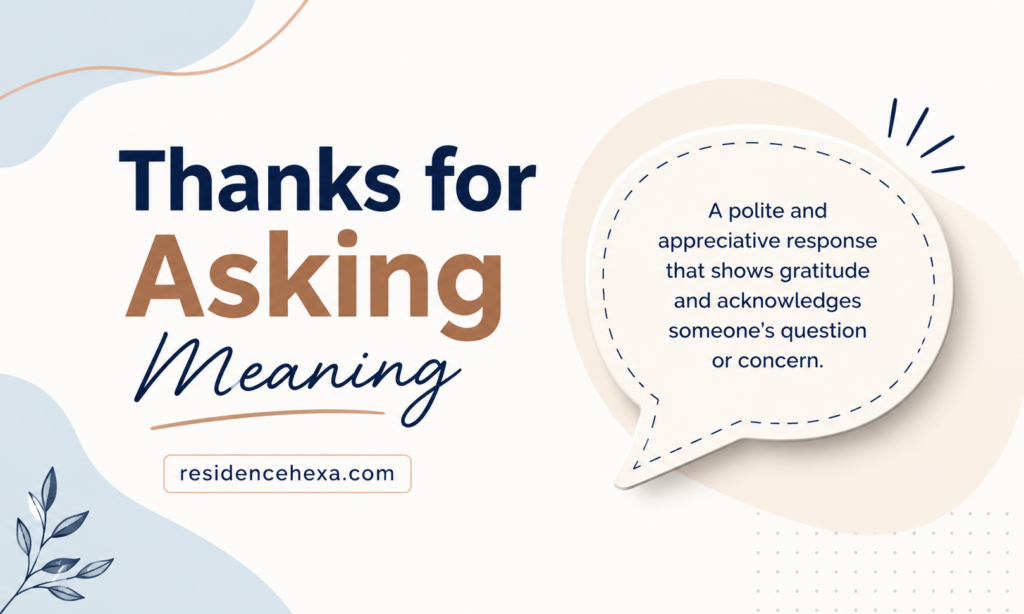
At its core, thanks for asking is an expression of gratitude directed at someone who showed enough care or curiosity to ask you a question — usually about your well-being, feelings, or personal situation.
According to Merriam-Webster, “thanks” is an informal way of expressing gratitude, derived from the fuller form “thank you.” When combined with “for asking,” the phrase literally communicates: I am grateful that you took the time to inquire.
The phrase can carry warmth, acknowledgment, or even sarcasm — depending entirely on tone and context. Used sincerely, it builds connection. Used with an eye roll or flat delivery, it signals the opposite. Understanding its meaning in full is the first step to using it well.
Why People Use This Expression
People use thanks for asking for several important reasons, all rooted in the human need for connection and mutual respect.
- To acknowledge someone’s care. When a colleague asks how your weekend went or a friend checks on your recovery, the phrase shows you noticed and appreciated the gesture.
- To soften transitions. It naturally leads into a longer answer, making the conversation feel intentional rather than rushed.
- To signal openness. Saying it signals that you are willing to engage and that the question was welcome.
- To model polite behavior. In both professional and personal settings, it establishes a tone of warmth and mutual respect.
The phrase works because it does two things at once: it thanks the person and signals that more is coming. That combination makes conversations feel human rather than transactional.
Grammar Structure of the Phrase
Understanding the grammar helps you use thanks for asking with full confidence.
The structure breaks down simply:
| Element | Role | Example |
| Thanks | Informal noun/verb expressing gratitude | Shortened form of “thank you” |
| for | Preposition showing reason | Connects gratitude to its cause |
| asking | Gerund (verb used as a noun) | The act of posing a question |
Together, the structure follows the pattern: thanks + for + gerund. This same construction appears in phrases like “thanks for coming,” “thanks for helping,” and “thanks for waiting.”
Both “thanks for asking” and “thank you for asking” are grammatically correct. The key difference is formality. “Thanks” is more casual and common in spoken conversation, while “thank you” fits better in emails, professional contexts, or formal written communication.
Using the Phrase in Daily Conversations
In everyday life, thanks for asking appears most naturally when someone shows personal interest in you. Here are some realistic examples across common situations:
Casual with friends:
- “I’m doing much better this week, thanks for asking!”
- “The job interview went well, thanks for asking — I think it went smoothly.”
With family:
- “Grandma is recovering nicely, thanks for asking.”
- “My exam results came out great, thanks for asking!”
In the workplace:
- “The project is on track, thanks for asking. We should finish by Friday.”
- “I’m feeling better after the flu, thanks for asking.”
Notice how in each case, thanks for asking appears either at the end of a sentence or as a standalone phrase followed by more detail. Both positions work — the beginning placement (“Thanks for asking — I’ve been great!”) adds a slightly warmer, more enthusiastic feel.
The phrase fits naturally into short exchanges as well as longer conversations. It works in person, in text messages, and in informal emails.
Using Thanks for Asking in Emails and Messages
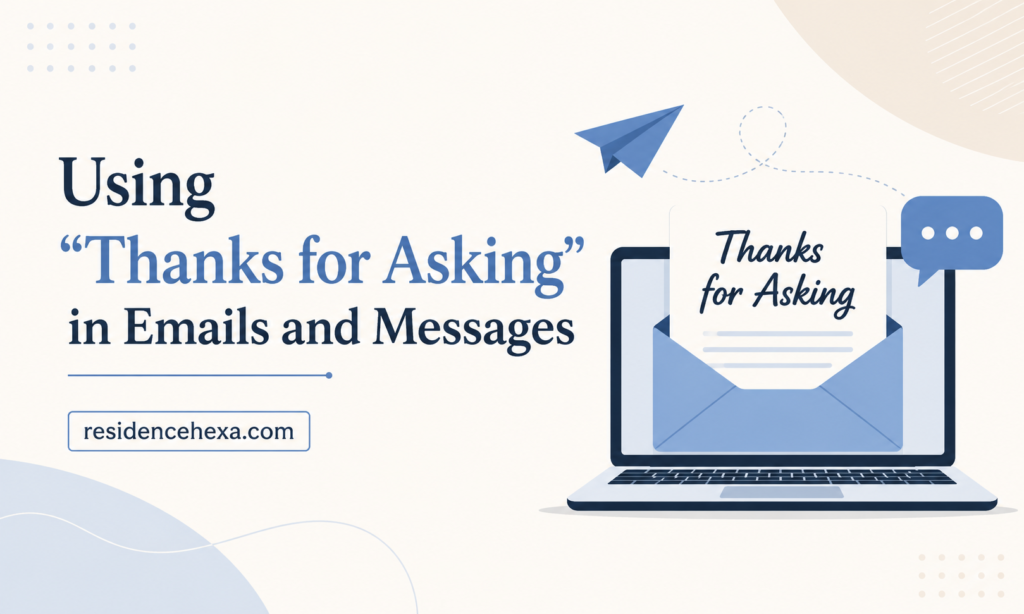
When written communication lacks vocal cues, punctuation and word choice carry the emotional weight. Using thanks for asking in emails and messages requires a bit more intentionality.
In a casual email:
Hi Sarah, I’m doing well, thanks for asking! The move went smoothly, and we’re finally settling in.
In a semi-professional message:
Thank you for asking about the timeline — I’m happy to share an update. We’re currently in the final testing phase.
In a formal business email:
Thank you for your inquiry. I appreciate you asking about our service options; I’d be happy to walk you through them.
A few tips for written use:
- Add an exclamation mark to convey warmth without sounding flat.
- Follow the phrase immediately with a substantive answer so it doesn’t feel like a filler.
- In highly formal correspondence, switch to “thank you for asking” or “I appreciate your inquiry” for a more polished tone.
Tone and Politeness in the Phrase
One of the most important things to understand about thanks for asking is that its meaning shifts completely with tone.
Sincere tone: Warm, open, accompanied by a genuine smile or enthusiastic punctuation. This version builds trust and rapport.
Sarcastic tone: Flat, drawn out, sometimes paired with an eye roll. This version communicates that you found the question intrusive, irrelevant, or annoying.
Neutral tone: Neither clearly warm nor sarcastic. This is common in emails where the reader may interpret it either way depending on their relationship with you.
This dual nature is what makes thanks for asking both versatile and risky. In professional settings, always pair it with a follow-up answer to prevent ambiguity. In personal conversations, let your tone do the heavy lifting.
When It Is Appropriate to Use the Phrase
Thanks for asking, it works best in specific situations. Knowing when to use it keeps your communication natural rather than awkward.
Ideal situations include:
- Someone asks about your health, mood, or well-being
- A friend or colleague checks in on a personal situation (a move, a medical procedure, a job search)
- Someone shows genuine curiosity about something meaningful to you
- You want to signal appreciation before launching into a detailed answer
- Responding to a question that required someone to show personal initiative or care
For example, if a manager stops by and asks, “How are you settling into the new role?” — responding with “I’m adjusting well, thanks for asking!” sounds natural, warm, and professional at the same time.
Situations Where the Phrase May Not Be Necessary
Just as important is knowing when thanks for asking does not fit.
Avoid it in these scenarios:
- Basic factual questions: “What time is the meeting?” → “Thanks for asking — it’s at 3 PM” sounds oddly formal.
- Information requests in professional contexts: “Did you finish the report?” → “Yes, thanks for asking” adds unnecessary awkwardness.
- Quick transactional exchanges where no personal concern is implied.
- Very formal letters or legal correspondence where it can seem out of place.
The phrase earns its place when there is a human element to the question — when someone genuinely cared enough to ask about you. When that element is absent, it is better to skip it.
Cultural Importance of Polite Responses
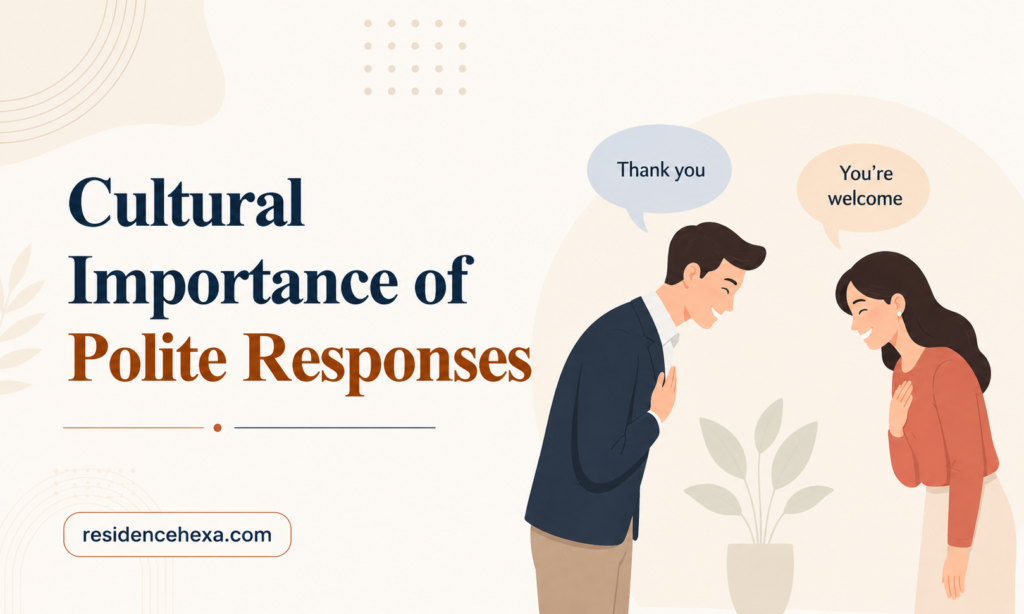
In English-speaking cultures, polite expressions like thanks for asking carry real social weight. They signal respect, warmth, and awareness of others — qualities that build both personal relationships and professional reputations.
Small phrases of courtesy act as social glue. When someone asks how you are and you respond with genuine warmth, you reinforce that the relationship matters. Skipping these phrases, or using them sarcastically, can create distance without you even realizing it.
Across cultures, the expectation around gratitude expressions varies. In many Western English-speaking environments, acknowledging a personal question with warmth is a baseline expectation of polite behavior. This is why phrases like thanks for asking are taught early in language learning — they go beyond grammar into the fabric of how people relate to one another.
For related guidance on choosing the right phrase for different situations, the Residence Hexa guide on “As Evidenced By” vs “As Evident By” shows how even small word choices can shift meaning and perception in communication.
Expanding Your Response After the Phrase
One of the best practices when using thanks for asking is to always follow it with meaningful content. The phrase acts as an opener — a door, not a wall.
Weak: “I’m fine, thanks for asking.”
Strong: “Thanks for asking — I’ve actually been really enjoying the new project. It’s challenging, but I feel like I’m learning a lot.”
The stronger version uses the phrase as a bridge into a fuller, more engaging response. This approach makes the other person feel genuinely heard and appreciated. It also signals that you took their question seriously.
Here are a few templates you can adapt:
- “Thanks for asking — things have been [adjective] because [brief reason].”
- “Thanks for asking about [topic]. Here’s where things stand: [update].”
- “I really appreciate you asking. [Full answer with detail].”
This is especially useful in professional settings, where a warm opener followed by a clear update builds both rapport and credibility.
Common Mistakes When Using the Phrase
Even native speakers make errors with thanks for asking. Here are the most frequent ones to avoid:
1. Using it as filler ❌ “The meeting is at noon, thanks for asking.” ✅ “The meeting is at noon.” (No need for the phrase when no personal care is implied.)
2. Overusing it. Saying thanks for asking in every conversation makes it sound robotic and insincere. Reserve it for moments where it genuinely adds warmth.
3. Forgetting punctuation in writing “Im fine thanks for asking” reads as flat and rushed. Add commas and apostrophes: “I’m fine, thanks for asking!”
4. Using it sarcastically without realizing the effect In professional or new relationships, sarcastic use can cause real misunderstandings. When in doubt, use a sincere tone.
5. Not following through with an answer The phrase sets up an expectation. If you say thanks for asking and then give a one-word answer, it feels incomplete. Always expand.
Similar Expressions in English
If thanks for asking starts to feel repetitive, here are natural alternatives you can rotate into your conversations:
| Expression | Best Used When | Tone |
| “Thank you for asking” | Professional or formal contexts | Polite, slightly formal |
| “I appreciate you asking” | Emphasizing genuine gratitude | Warm, sincere |
| “Thanks for checking in” | Someone asked about your well-being | Casual, personal |
| “I’m glad you brought that up” | The question opened a useful topic | Conversational, collaborative |
| “That’s a great question” | Responding to an insightful inquiry | Engaging, positive |
| “It’s nice of you to ask” | Expressing warmth toward the questioner | Friendly, informal |
| “I appreciate your concern” | More formal or sensitive topics | Professional, empathetic |
Varying your expressions prevents your speech from sounding scripted. For similar guidance on how word choices evolve in meaning, check out the Residence Hexa article on “Given or Giving — Which Is Correct?” — a practical look at how subtle grammatical differences change the entire sense of a sentence.
Sentence Structure and Clarity
Getting the structure of thanks for asking right in a full sentence is straightforward once you understand its placement options.
At the end of a sentence (most common): “I’m doing well, thanks for asking.”
At the beginning of a sentence: “Thanks for asking — I’ve been meaning to give you an update.”
As a standalone phrase before a detailed answer: “Thanks for asking. Here’s what’s been happening…”
A comma typically separates the phrase from the rest of the sentence. When placed at the start, a dash or period works well to transition into the answer. Avoid using it mid-sentence unless the flow naturally supports it, as this can make the sentence feel choppy.
Writing Practice
Practicing this phrase in different contexts will help it feel natural. Try completing these exercises:
- A friend asks how your job interview went. Write a 2-sentence response using thanks for asking.
- Your manager asks how you’re adjusting to a new team. Write a professional reply of 3 sentences.
- Rewrite this sentence more naturally: “Thanks for asking I am okay.”
- Write two versions of a response — one using thanks for asking sincerely and one sarcastically — and note what changes in punctuation, word order, and tone.
These short exercises build the kind of instinctive feel for the phrase that turns a grammar rule into a communication habit.
Reflection on Polite Communication
Language is never just about words — it is about the relationships those words build or break. Thanks for asking is a small phrase with a large function. It tells the other person: You mattered enough for me to notice that you asked.
Polite communication is not about following rigid rules. It is about making people feel seen, respected, and comfortable in their interaction with you. Phrases like this one are part of a broader toolkit of courteous language that, used thoughtfully, improves every conversation you have — from casual catch-ups to high-stakes professional exchanges.
The more intentionally you use expressions of gratitude and acknowledgment, the more naturally they come. That intentionality is what separates someone who merely speaks English from someone who communicates well.
Conclusion
Thanks for asking is one of those simple phrases that does a lot of quiet work in everyday communication. It acknowledges someone’s care, sets a warm tone, and opens the door to a fuller response. Used sincerely and appropriately, it builds connection — at work, at home, and in every conversation in between.
The key takeaways are straightforward: use it when someone genuinely shows personal interest, follow it with a real answer, match your tone to the situation, and avoid overuse. Whether you write it in an email with an exclamation mark or say it in person with a smile, thanks for asking earns its place in polite, effective English communication.